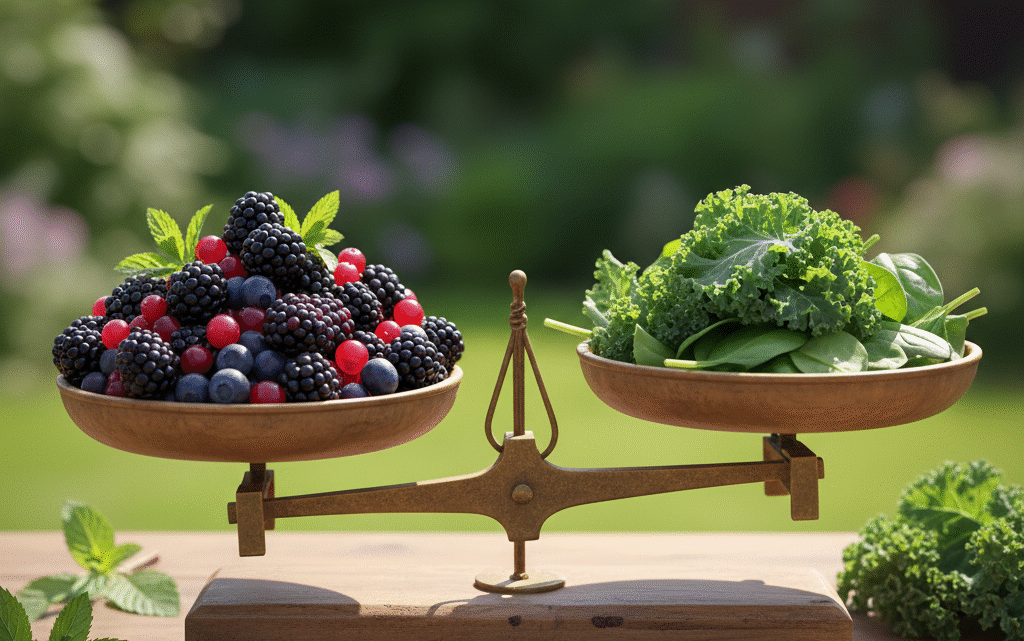
ORAC Truth: Berries vs. Kale for Max Antioxidant Power
The ORAC Truth: Why Berries Crush Kale in Antioxidant Power
When comparing **Berries vs. Kale** in the raw **antioxidant capacity** battle, a surprising truth emerges. We all know leafy greens like kale and spinach are healthy, but this guide explores the scientific measurement—the **ORAC** test—to answer why small, fragile **berry** fruits consistently crush popular vegetables like **kale** and spinach in the health fight. **The definitive answer in the Berries vs. Kale debate is clear: berries win on raw ORAC score.** The true marvel of berries extends beyond flavor; their power lies in concentrated **health benefits**.

Berries like strawberries, blueberries, and raspberries are not only delicious but also potent sources of concentrated nutrients and antioxidants.
In short, the answer is rooted in the powerful holistic cellular defense mechanism these tiny superfoods offer our bodies. This guide explores the scientific measurement of this power. Furthermore, we discuss why daily berry consumption is indispensable. **For details on the measurement, see the section:** Understanding the ORAC Test. Therefore, let’s start with the basics.
How Is Antioxidant Power Measured? Understanding the ORAC Test
Food’s capacity to fight off free radicals is measured by a standard method. This is known as the Oxygen Radical Absorbance Capacity (ORAC) test. Specifically, a higher ORAC score suggests greater antioxidant potential. The ORAC assay uses AAPH, a free radical initiator, making the reaction biologically relevant. This accepted test is vital for comparing different foods’ antioxidant capacity.

The ORAC test scientifically determines the antioxidant strength of a food by measuring its ability to neutralize free radicals.
Dark berries, in particular, consistently demonstrate extraordinarily high ORAC values. Consequently, they often surpass most common vegetables. This superiority stems from their unique phytochemical composition, which we will explore next. **The secret lies in these compounds.** Read more about Anthocyanin Benefits here.
ORAC Comparison: The **Berries vs. Kale** Antioxidant Showdown
Direct comparisons show that some berry varieties contain antioxidant capacities far higher than even commonly praised vegetables. For instance, certain blueberry and blackberry species often register ORAC scores several times greater than those of popular leafy greens like kale or spinach. This shows a clear advantage in raw antioxidant potential. **This crucial ORAC comparison of Berries vs. Kale highlights the anthocyanin advantage.**

This ORAC comparison chart demonstrates the superior berries antioxidant power vs kale and other leafy greens.
This supremacy is not accidental. On the contrary, it is a direct result of the high concentration of Anthocyanins naturally present in berries. Moreover, these powerful compounds function at a cellular level, which we detail next. They are key to inflammation reduction.
The Secret of Color: Anthocyanin Benefits and Cellular Defense
Anthocyanins—the pigments responsible for deep red, blue, and purple hues—are the key to **Maximum Antioxidant Power**. These powerful flavonoids are much more than just color agents. Indeed, they are the primary agents protecting our cells against oxidative stress. Anthocyanins work at the cellular level by neutralizing free radicals, reducing inflammation, and modulating gene expression. This promotes robust cellular defense.

A close-up view of Anthocyanin pigments working as key bioactive molecules enhancing cellular defense.
This deep protective mechanism makes regular berry consumption crucial for chronic disease prevention and heart health. However, to achieve maximum effect, consistency is everything. For more information on health benefits, check this authoritative guide on berry advantages.
The Consistency Rule: Why Daily Berry Consumption is a Must
Scientific studies recommend obtaining antioxidants through a balanced diet. However, the most crucial factor is consistency. The effects of Anthocyanins and other nutrients in berries are transient. In other words, the body rapidly metabolizes them.

Regular berry consumption ensures sustained antioxidant benefits for gut and cellular health.
Therefore, consuming a serving of berries every day, not just occasionally, is vital. This daily intake maintains a constant shield against free radicals. **This daily consistency is what truly defines the superiority of Berries vs. Kale in terms of sustained cellular protection.** This habit sustains the **antioxidant power advantage** that berries offer over greens. Now that we know why, let’s discuss the practical application.
Practical How-To: Integrating Berries into Your Daily Diet
Making daily berry consumption a pleasure, not a chore, is simple. Integrating **Anthocyanin-rich berries** daily ensures you get the most out of your diet. Below are three easy ways to integrate berries seamlessly into your diet. Try these ideas:
- Breakfast Booster: Add a handful of fresh or frozen dark berries to your oatmeal, yogurt, or morning smoothie.
- Quick Snack: Enjoy a simple bowl of fresh blackberries, raspberries, or blueberries between lunch and dinner.
- Dessert Alternative: Satisfy evening sweet cravings healthily by blending frozen berries with a little natural yogurt.
Remember, both fresh and properly frozen (IQF) berries retain their nutritional value, making them accessible year-round for superior antioxidant capacity. If you want a deeper look at ORAC scoring methods, see this USDA article on ORAC values.
Frequently Asked Questions (FAQs) on Anthocyanin Benefits and Science
After examining the **ORAC truth** regarding **berries vs. kale**, these frequently asked questions clarify the science behind berries’ superior protective benefits.
How do berries help prevent chronic diseases like Type 2 Diabetes?
Anthocyanins help improve blood sugar control by modulating the gut microbiome. They also enhance insulin sensitivity and reduce chronic inflammation. This action can significantly lower the risk of Type 2 Diabetes.
Are catechins in caneberries as effective as those in green tea?
Yes. Catechins found in caneberries like raspberries and blackberries show potent effects similar to those in green tea. These properties are particularly beneficial for heart health and cognitive health.
Can eating berries truly cause premalignant lesions to regress?
Research suggests that the consumption of berry extracts or concentrated powders can slow down pre-cancerous lesion progression. Specifically, it can cause regression in some lesions (e.g., in the colon or esophagus). This effect is due to their dense content of anti-inflammatory and anti-proliferative compounds.