IQF Grade A vs Grade B: The Complete B2B Sourcing Guide
Grade A vs Grade B: The IQF Berry Specification That Determines Your Profit Margin
The frozen berry market—for blueberries, blackberries, raspberries, and their hybrids—is a massive, continuously growing sector. In order to achieve success in business-to-business (B2B) trade, understanding industry standards that define frozen berry quality is critical. In fact, this includes the U.S. Department of Agriculture (USDA) classifications for Individually Quick Frozen (IQF) fruit, specifically differentiating between grades like IQF Grade A (Fancy) vs Grade B (Choice).
Therefore, this technical guide provides suppliers, processors, and buyers with an essential breakdown of the key differences between USDA Grade A (Fancy) and Grade B (Choice). Ultimately, your decision between IQF Grade A vs Grade B is the primary factor determining your product’s price, usability, and fitness for its final high-volume application.
IQF Technology: Why Quick Freezing Minimizes Texture Loss
IQF (Individually Quick Frozen) ensures a long shelf life with minimal loss of quality and nutrients. Furthermore, the method ensures fruits are frozen quickly and individually — preventing clumping and enabling downstream industrial processing.
Key Freezing Methods:
- Spiral Belt Freezers: Used where careful handling and efficiency are required.
- Fluidized Bed Freezers: Ideal for small-size IQF products; offers maximum speed and efficiency.
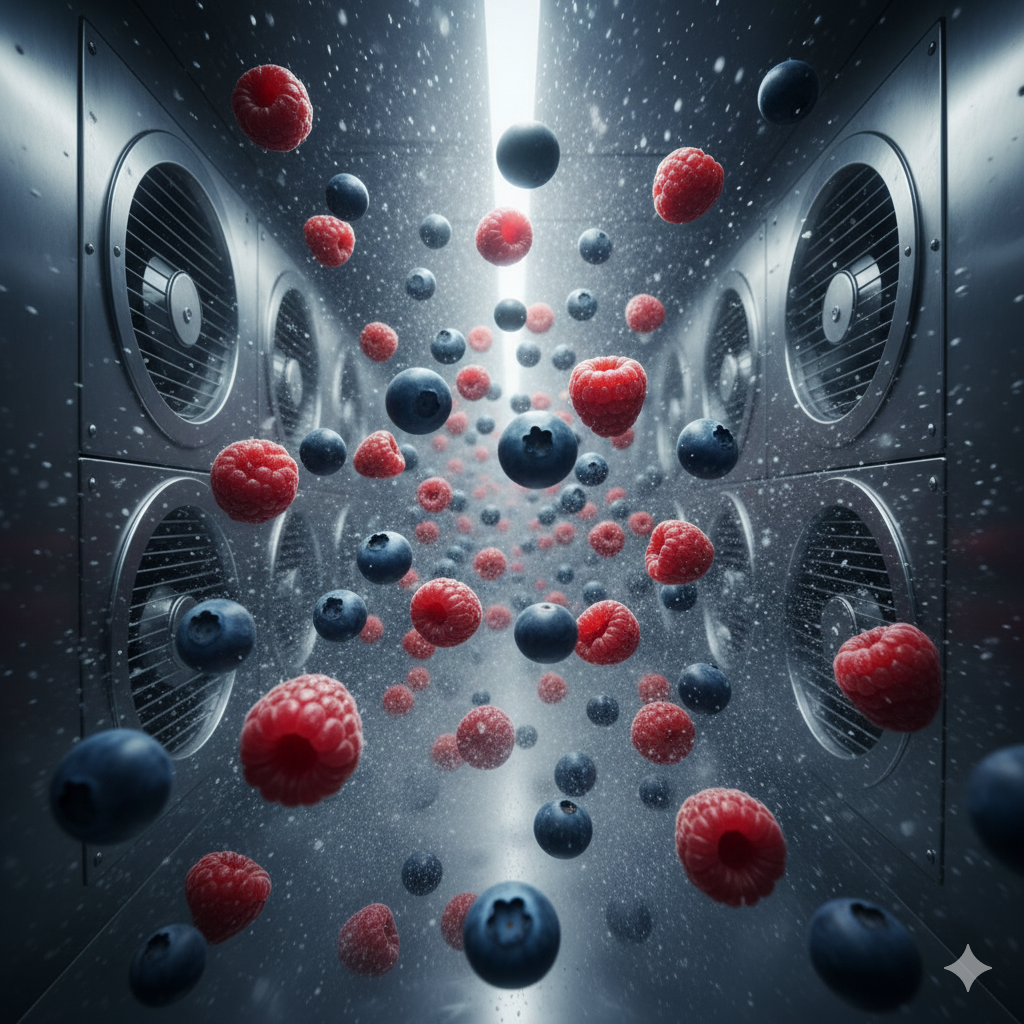
Fluidized Bed Freezer: High-efficiency technology used for quickly freezing small, individual products to maintain IQF quality.
Quality Benchmark: Understanding the USDA Grading System
The USDA Agricultural Marketing Service sets standards to measure frozen berry quality. Frozen berries generally fall into four grades:
- U.S. Grade A (Fancy)
- U.S. Grade B (Choice)
- U.S. Grade C (Standard)
- U.S. Grade D (Substandard)
The B2B Tipping Point: IQF Grade A vs Grade B
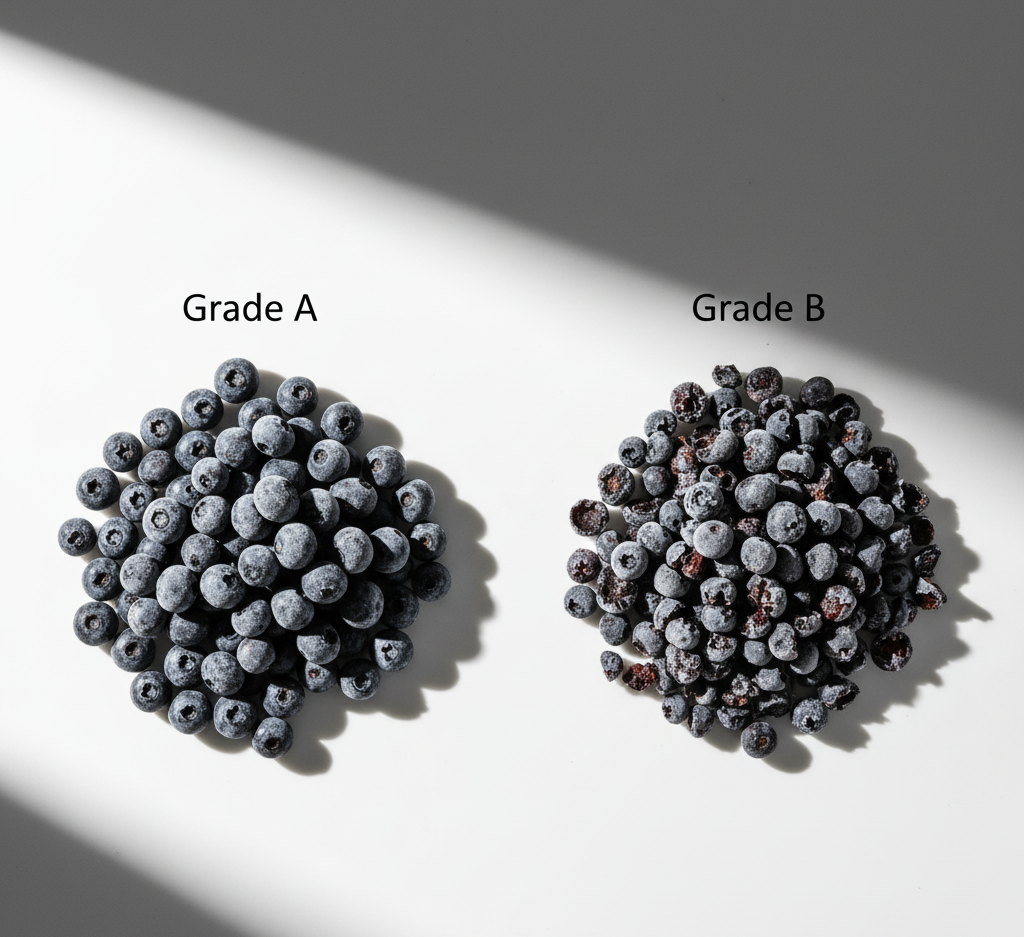
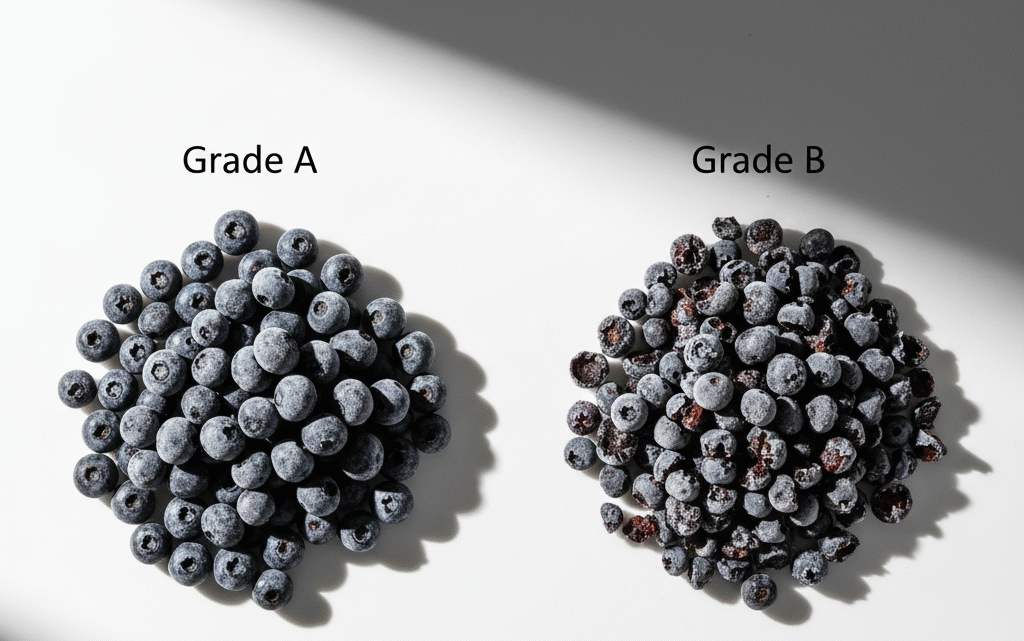
Visual Comparison: Grade A (Left) maintains integrity, while Grade B (Right) allows for a higher tolerance of crushed fruit.
U.S. Grade A (Fancy)
- Uniform vibrant color
- Maximum berry integrity
- Best for premium retail & bakery use
U.S. Grade B (Choice)
- Crushed blackberries: max **30%** crushed
- Hybrids (loganberry, dewberry): max **40%** crushed
- Damaged/undeveloped fruit: max **10%**
- Extraneous material: 1 stem/leaf per 16 oz
Commercial Application Summary
- Choose Grade A → premium whole berry use
- Choose Grade B → processed products (jam, puree, yogurt, filling)
- Grade C → coloring and non-visual applications
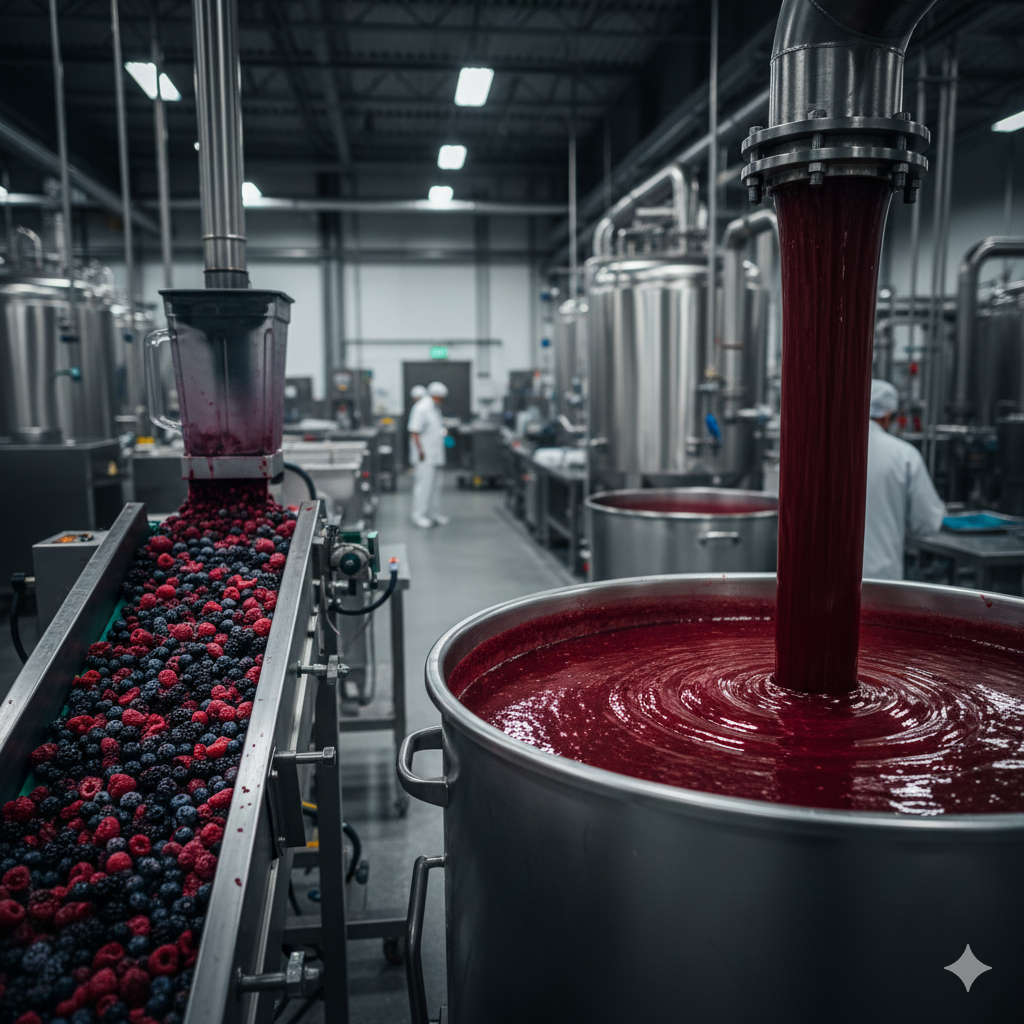
Grade B berries provide cost-effectiveness where aesthetic defects are tolerated.
Frequently Asked Questions (FAQs)
What is the main difference between Grade A and Grade B?
Grade A has minimal defects. Grade B allows measurable defects such as up to 30–40% crushed fruit depending on the berry.
Are Grade B berries safe?
Yes, USDA grading is **quality**, not **safety**. All grades are safe to consume.
Why is IQF preferred?
Because berries are frozen individually — not clumped — preserving texture, color, and nutrients.